Vocabutory #3
Project: Vocabutory
This will be the last devlog for Vocabutory.
But wait! Let me explain.
The Keys to Making a Good Incremental Game
With the latest version, I proved that the core gameplay worked. However, there were still major challenges preventing the game from becoming a complete incremental experience.
The first issue was progression. One piece of feedback I repeatedly received during playtests was that the game felt too simple. While there were plenty of traits that could create different synergies, that wasn't enough.

Through my research, I realized that a critical part of incremental games is the feeling of progression through mechanical evolution. Players need more than additional options; they need the game itself to transform over time.
What I needed to provide wasn't width—it was depth.
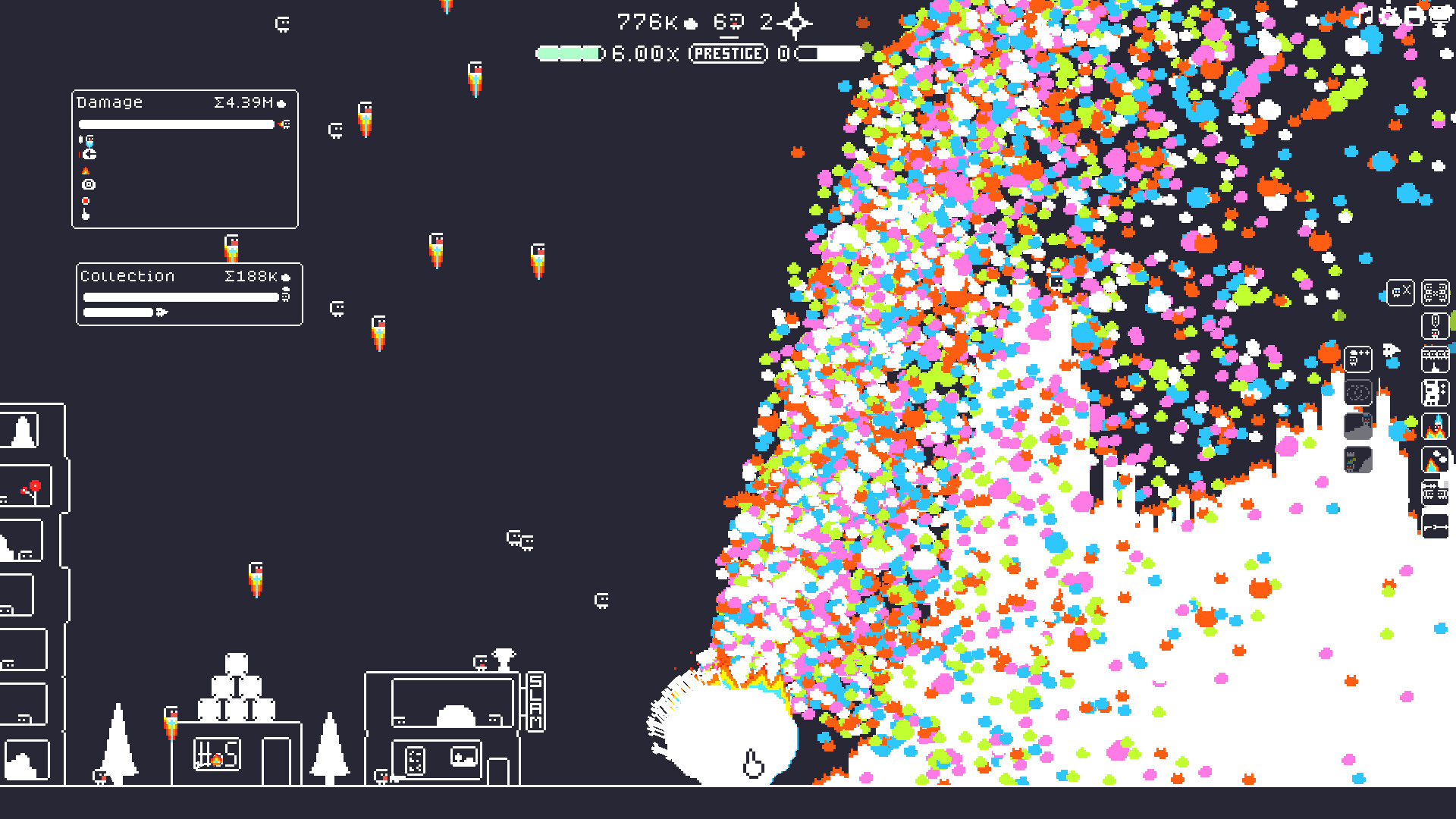
The second issue was first impressions. Incremental games need strong visuals, a compelling theme, and excellent readability. If I wanted my game to stand out, players needed to understand how to play and be intrigued within just a few seconds.
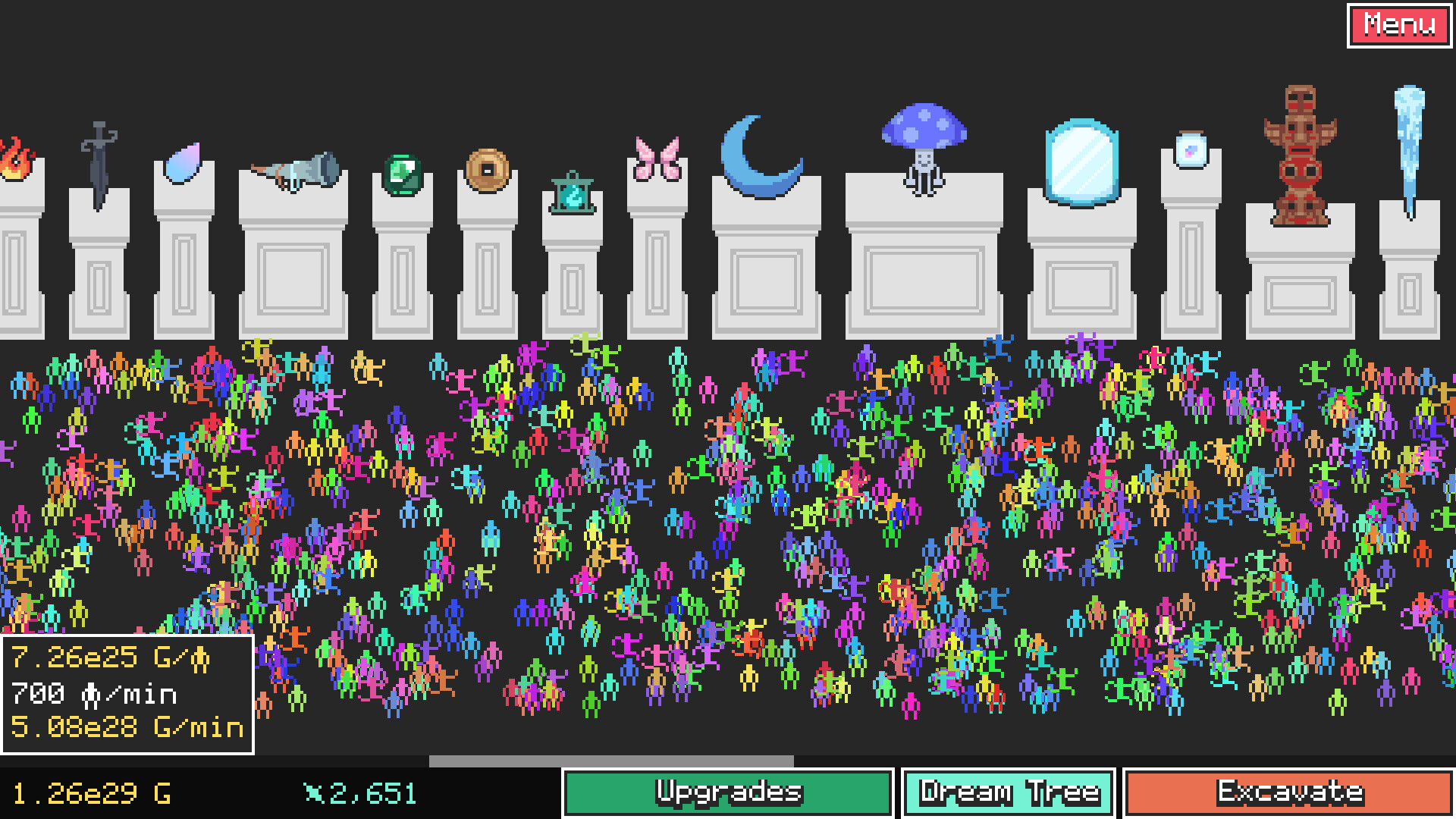
A strong theme, appealing aesthetics, and a clear UI were all essential.
Infinite Monkey Theory
During playtesting, one idea caught my attention: the Infinite Monkey Theory. For those unfamiliar with it, the theory suggests that given an infinite number of monkeys and an infinite amount of time, they could eventually recreate the complete works of Shakespeare. I immediately thought this theme would fit my game perfectly, so I quickly built a prototype around it.
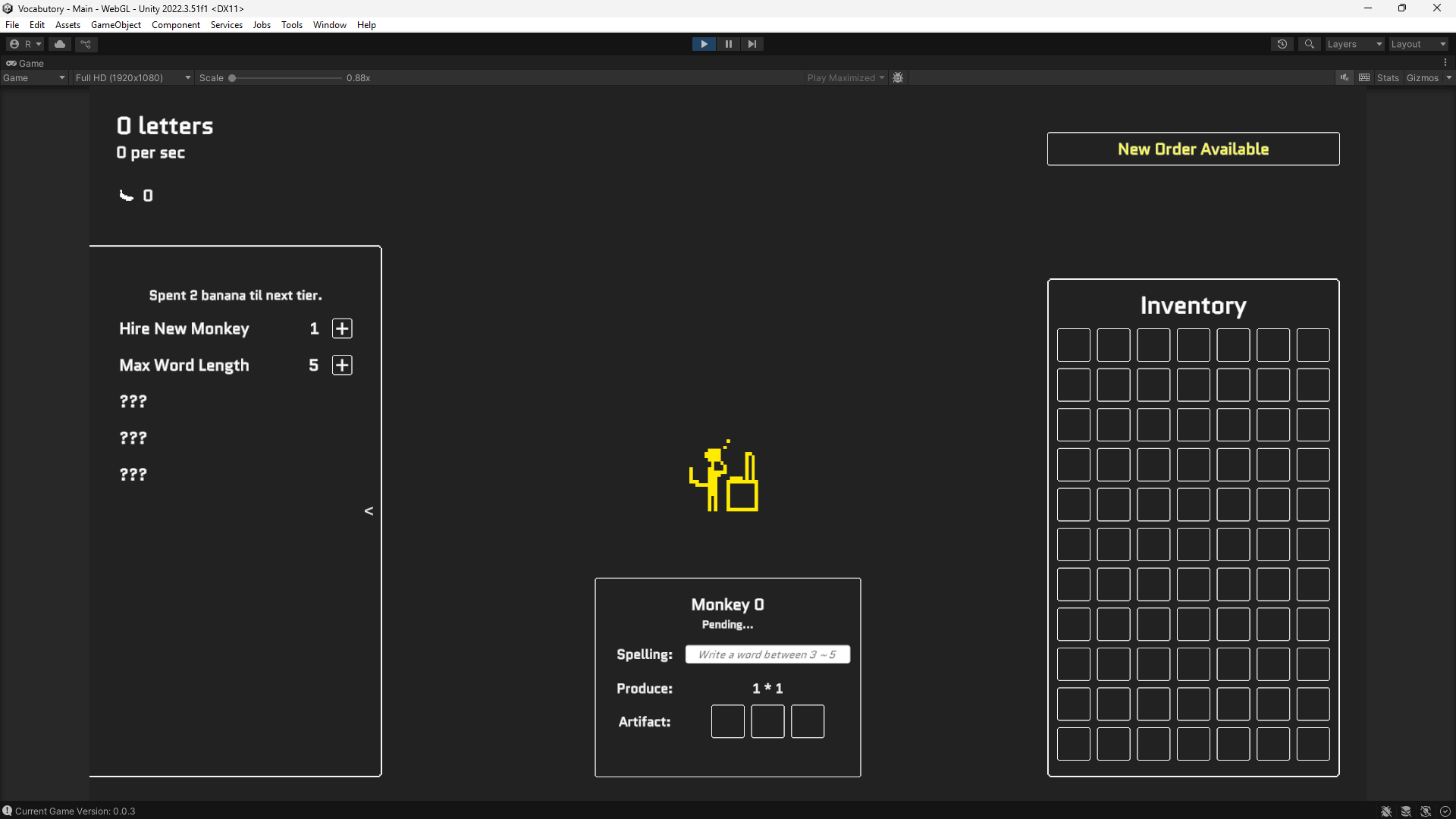
It looked promising, but I still felt that something fundamental was missing. As I mentioned earlier, I needed solutions for both progression and theme. While experimenting with different themes, I also wanted to explore alternative gameplay directions.
Why Need Keyboard When You Have Mouse?
Then Bongo Cat came to mind. With desktop companions becoming increasingly popular during 2025, I wondered whether that concept could work with my game. Since the characters would already be typing, why not turn them into productivity companions? While you worked, your companion would work as well, generating letters in the background.
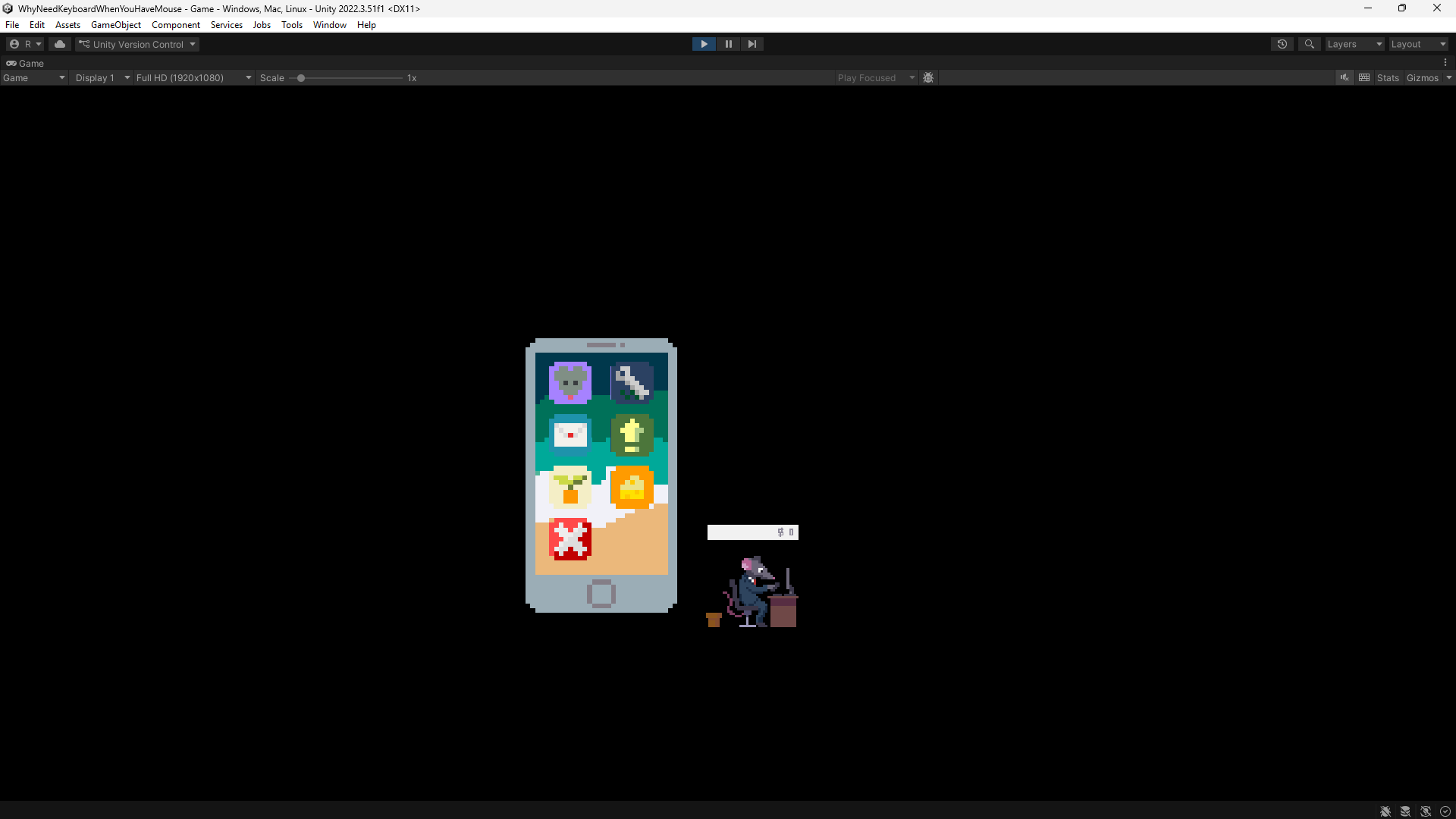
In this version, I experimented with a mouse theme and gave it the pun title "Why Need Keyboard When You Have Mouse?" After finishing the prototype and testing it, I realized this direction wasn't aligned with my vision.
My ideal playtime for the game was around two hours, with optional endgame content. Turning it into a desktop companion would dramatically increase the overall playtime. More importantly, I would have to sacrifice much of the strategic decision-making because the pacing of the game would fundamentally change. I still think the idea could work, but considering my limited development time, I decided to put it aside.
You Hive My Word
Even after the previous prototypes, I kept asking myself: "How can I introduce mechanical changes that support progression?" From my research, I believed that players needed something new every five minutes—small shifts that constantly encouraged strategic adjustments. One idea came to mind: "What if I utilized spatial relationships on the screen?"
It was a terrible idea.
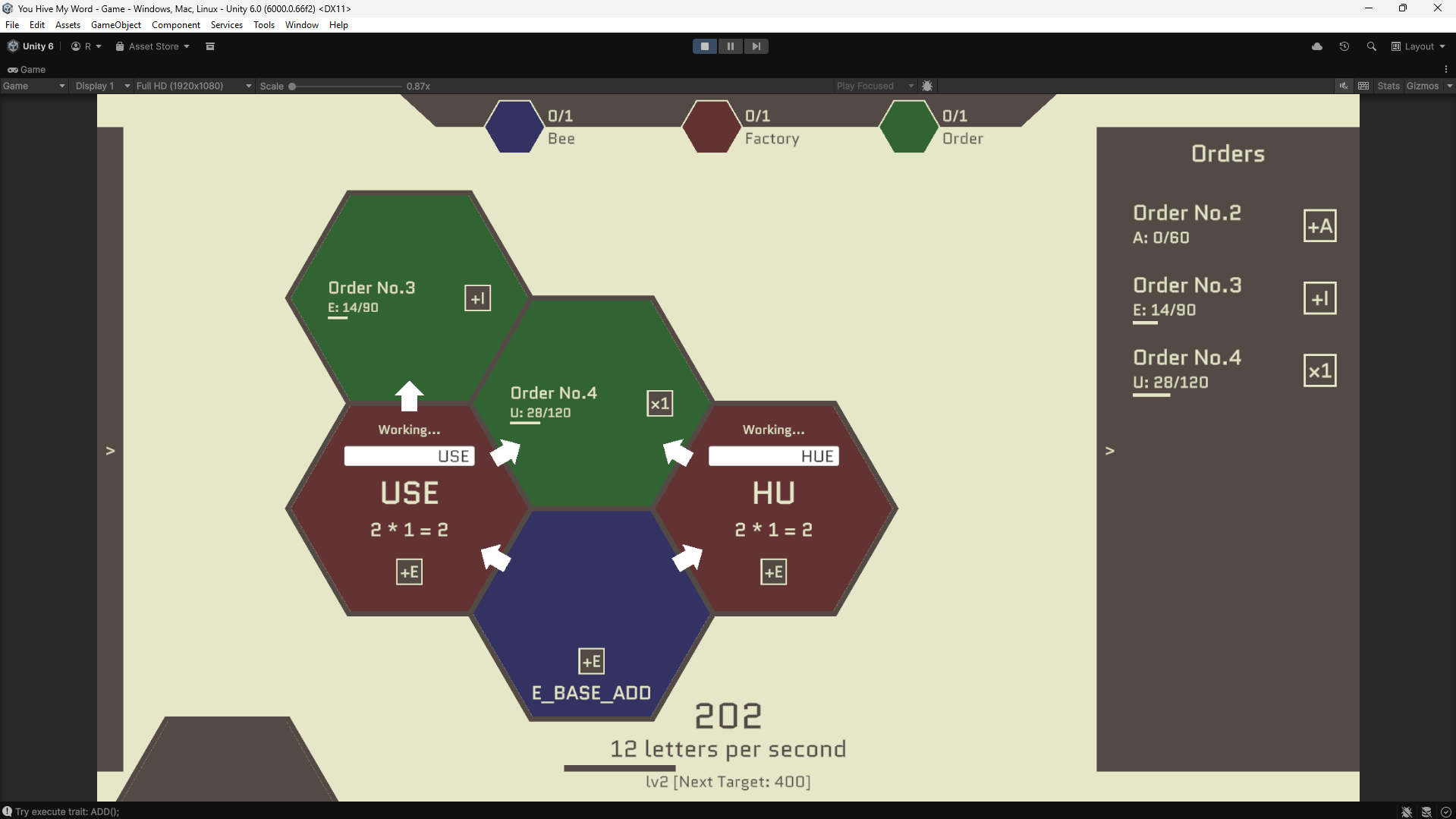
I rebuilt the entire game around a bee theme, mainly because I could call the workers "spelling bees." I also came up with the title "You Hive My Word," which I loved because it not only emphasized the bee theme but also hinted at the game's wordplay. But most importantally, the prototype featured a hexagonal relationship system. Players could assign tiles as bee rooms, factory rooms, or order rooms.
- Bee rooms provided their abilities to nearby factory rooms.
- Factory rooms supplied their production to nearby order rooms.
Don't Think Too Much, Just Do It
After playtesting this prototype, I realized something important. My original concept was already difficult to explain within the first few seconds of gameplay. Adding a spatial management system only made the experience even harder to understand. Even though I genuinely enjoyed this system, I had to let it go because it didn't support the type of game I wanted to make. Eventually, I realized that I had spent too much time worrying about progression when other problems were far more urgent. A strong interface and a compelling theme were more critical than an elaborate progression system.
So, I went back to square one.
After analyzing successful incremental games on the market, I decided to focus on visual clarity first. I discarded every idea that wasn't working and built one final prototype. I created a physics system that increased the distance between creating a word and receiving its score. This not only made the gameplay easier to understand, but also created opportunities to introduce new mechanical twists later on. I ultimately kept the bee theme because I had also come up with a Chinese title that I loved: 「蜂建字度」
At that moment, something finally clicked, and that is why this will be the last devlog for Vocabutory.
In the future, development updates will continue under its new name. Still, I'm grateful for everything I learned while exploring different possibilities through Vocabutory.
Comments